From Christchurch to Tanzania: Child sponsor meets the girl behind the letters

When Isabel Stanley gave up food for the World Vision 40 Hour Challenge as a teenager 50-odd years ago, she could never have imagined where that small act of solidarity would lead.
Decades later, the 63-year-old found herself in a rural Tanzanian village, sitting shoulder to shoulder with a 13-year-old girl she has sponsored for years. Now she was face-to-face with Nchambi, no longer just a face in a photograph, but a softly spoken teenager with a shy smile and dreams she is only just beginning to shape.
Isabel says child sponsorship has always been important to her. She says, “When we married and started having children of our own, we began sponsoring from the get-go. We’ve always had at least one sponsored child.”
Today, the Christchurch resident and her husband sponsor two children, one in Malawi and one in Tanzania. This year, Isabel took “trip of a lifetime” to meet Nchambi, the girl she has been sponsoring with World Vision for several years.
“We thought, if we’re going to be in Africa, how could we not?” she says. “It felt like an incredible privilege.”
Water — and what it really means
Before meeting Nchambi, Isabel and her husband were taken to see the community projects their sponsorship supports.
The focus was on child safety, education, sanitation, water supply, and health. But it was water that left the deepest impression on Isobel.
A newly installed solar-powered system, now pumps water from 50 metres below ground and distributes it across multiple villages, benefiting around 350 people. Thirty solar panels gleam above the pump, a striking symbol of progress driven by the community itself.
Previously, families walked long distances to collect salinated and often unclean water.
“Something as simple as clean water, which we just turn a tap for, is life-changing,” Isabel says. “The community members shared how grateful they were knowing that they now have water that is safe and healthy to drink. Even washing is easier, because they don’t need as much soap or detergent with the softer water.”
During a visit to a high school, a senior student approached Isabel and the project team. The student had recently been seriously unwell, and World Vision staff had helped her access healthcare. Now she was healthy and back in class.
“She was almost in tears,” Isabel recalls quietly. “You realise this isn’t abstract, this is a young person’s life.”
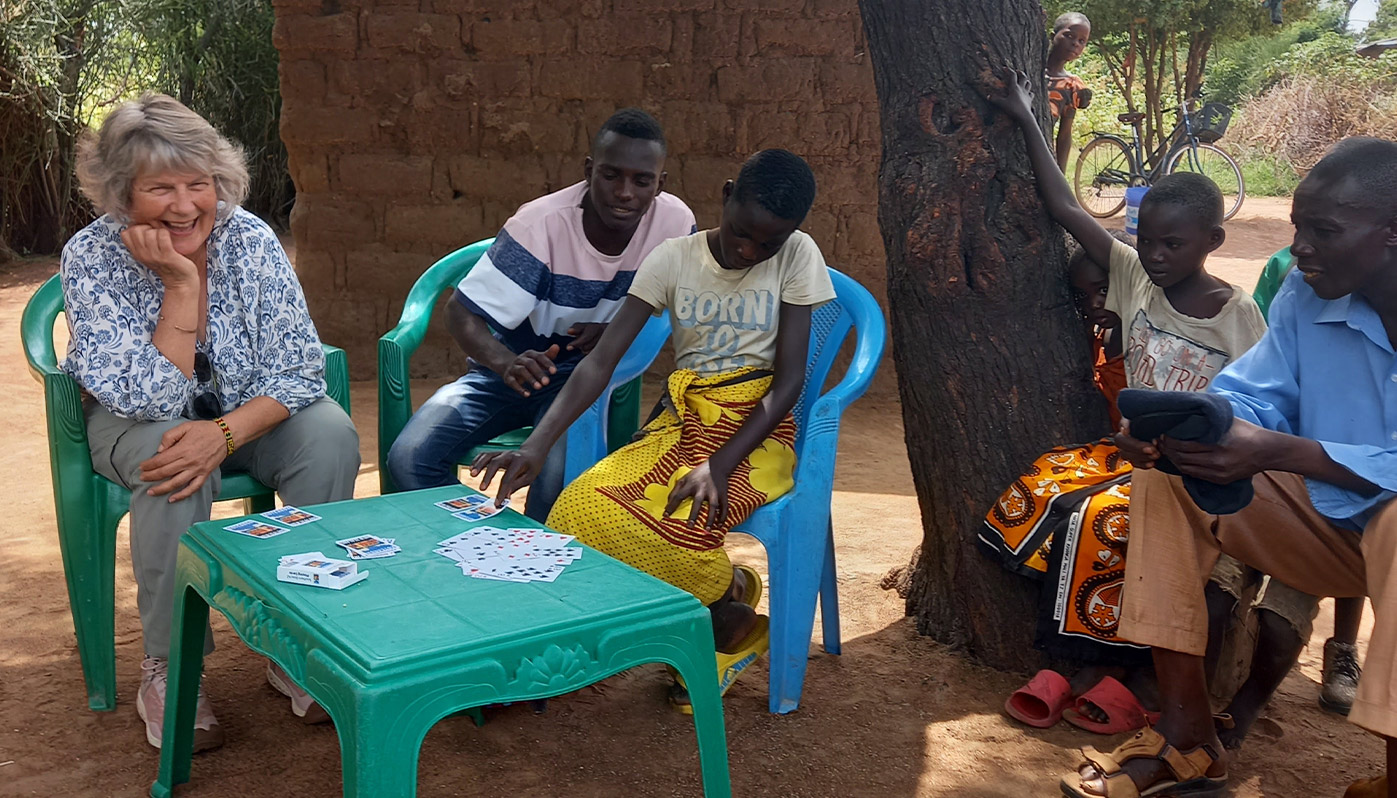
Later that day, Isabel finally met Nchambi at her family home. A shy 13-year-old who is the fifth of nine children. With the help of a translator and an uncle who spoke some English, Isabel pulled out a pack of cards decorated with a kiwi, a small piece of Aotearoa carried across the world.
She taught Nchambi a maths-based game she uses in her own teaching, “You have to make a two-digit number higher than mine,” she explains. “She picked it up so quickly, and then she beat me quite easily!”
Nchambi is learning sewing skills and hopes to become a tailor one day, so Isabel came prepared. Tucked into her bag were sketchbooks and art materials. Sitting together, she drew a simple dress design and then handed it over, inviting the teenager to choose the colours and create a design of her own.
“She spent the rest of our visit immersed in drawing. Hopefully it encourages her creative side, especially if that’s the direction she’s heading.”
Nchambi’s family, who do not have electricity, were also given a solar light, which she thought could help for evening study or chores. Isabel also brought soccer balls for the children, which were well received. “Her siblings were straight into kicking the ball around,” Isabel says. “It was pure joy.”
Community-led change
For Isabel, one of the most powerful aspects of the visit was seeing that decisions are driven by the community itself. “It’s not about outsiders coming in and saying, ‘this is what you need,’” she says. “The community decides their priorities, and the team works alongside them. That shift and flipping of the script is so important.”
Isabel says seeing local staff, who live in the region and speak the language, leading the work was deeply encouraging. “They’re the best people to be doing this,” she says. “They’re passionate, and they’re in it for the long haul.”
Driving through the region, Isabel was also struck by fields of maize and sunflowers stretching towards the horizon, productive land that challenged common stereotypes.
“It was hopeful,” she says. “You could see potential everywhere.”
Isabel says child sponsorship is a powerful reminder of the difference one person can make to the lives of so many others.
“Child sponsorship is community sponsorship. Yes, it supports your sponsored child, but it also strengthens the whole community. And when child in a family benefits, that flows on to everyone. It’s important that we support communities where the basics we take for granted are still being built,” she says. “And when you see it with your own eyes, you realise it truly matters.”
Isabel’s journey has come full circle, from taking part in the World Vision 40 Hour Challenge as a teenager to witnessing, first-hand, the impact of that fundraising through clean water now flowing in a Tanzanian village.
Decades later, the 63-year-old found herself in a rural Tanzanian village, sitting shoulder to shoulder with a 13-year-old girl she has sponsored for years. Now she was face-to-face with Nchambi, no longer just a face in a photograph, but a softly spoken teenager with a shy smile and dreams she is only just beginning to shape.
Isabel says child sponsorship has always been important to her. She says, “When we married and started having children of our own, we began sponsoring from the get-go. We’ve always had at least one sponsored child.”
Today, the Christchurch resident and her husband sponsor two children, one in Malawi and one in Tanzania. This year, Isabel took “trip of a lifetime” to meet Nchambi, the girl she has been sponsoring with World Vision for several years.
“We thought, if we’re going to be in Africa, how could we not?” she says. “It felt like an incredible privilege.”
Water — and what it really means
Before meeting Nchambi, Isabel and her husband were taken to see the community projects their sponsorship supports.
The focus was on child safety, education, sanitation, water supply, and health. But it was water that left the deepest impression on Isobel.
A newly installed solar-powered system, now pumps water from 50 metres below ground and distributes it across multiple villages, benefiting around 350 people. Thirty solar panels gleam above the pump, a striking symbol of progress driven by the community itself.
Previously, families walked long distances to collect salinated and often unclean water.
“Something as simple as clean water, which we just turn a tap for, is life-changing,” Isabel says. “The community members shared how grateful they were knowing that they now have water that is safe and healthy to drink. Even washing is easier, because they don’t need as much soap or detergent with the softer water.”
During a visit to a high school, a senior student approached Isabel and the project team. The student had recently been seriously unwell, and World Vision staff had helped her access healthcare. Now she was healthy and back in class.
“She was almost in tears,” Isabel recalls quietly. “You realise this isn’t abstract, this is a young person’s life.”
Later that day, Isabel finally met Nchambi at her family home. A shy 13-year-old who is the fifth of nine children. With the help of a translator and an uncle who spoke some English, Isabel pulled out a pack of cards decorated with a kiwi, a small piece of Aotearoa carried across the world.
She taught Nchambi a maths-based game she uses in her own teaching, “You have to make a two-digit number higher than mine,” she explains. “She picked it up so quickly, and then she beat me quite easily!”
Nchambi is learning sewing skills and hopes to become a tailor one day, so Isabel came prepared. Tucked into her bag were sketchbooks and art materials. Sitting together, she drew a simple dress design and then handed it over, inviting the teenager to choose the colours and create a design of her own.
“She spent the rest of our visit immersed in drawing. Hopefully it encourages her creative side, especially if that’s the direction she’s heading.”
Nchambi’s family, who do not have electricity, were also given a solar light, which she thought could help for evening study or chores. Isabel also brought soccer balls for the children, which were well received. “Her siblings were straight into kicking the ball around,” Isabel says. “It was pure joy.”
Community-led change
For Isabel, one of the most powerful aspects of the visit was seeing that decisions are driven by the community itself. “It’s not about outsiders coming in and saying, ‘this is what you need,’” she says. “The community decides their priorities, and the team works alongside them. That shift and flipping of the script is so important.”
Isabel says seeing local staff, who live in the region and speak the language, leading the work was deeply encouraging. “They’re the best people to be doing this,” she says. “They’re passionate, and they’re in it for the long haul.”
Driving through the region, Isabel was also struck by fields of maize and sunflowers stretching towards the horizon, productive land that challenged common stereotypes.
“It was hopeful,” she says. “You could see potential everywhere.”
Isabel says child sponsorship is a powerful reminder of the difference one person can make to the lives of so many others.
“Child sponsorship is community sponsorship. Yes, it supports your sponsored child, but it also strengthens the whole community. And when child in a family benefits, that flows on to everyone. It’s important that we support communities where the basics we take for granted are still being built,” she says. “And when you see it with your own eyes, you realise it truly matters.”
Isabel’s journey has come full circle, from taking part in the World Vision 40 Hour Challenge as a teenager to witnessing, first-hand, the impact of that fundraising through clean water now flowing in a Tanzanian village.