From War-Torn Ethiopia to Rotorua: A Humanitarian's Journey Home

Kiwi Stephen Court has spent years in some of the world’s most desperate places confronted by violence, trauma, and hunger. Now he’s returned home as World Vision New Zealand’s Director of International Partnerships, but carries with him the stories of the children of northern Ethiopia.
After six years in Ethiopia, what stays with Kiwi Stephen Court is hearing the same haunting story over and over again – death, rape, and escape.
“It didn’t matter where I was in the Tigray region of Ethiopia, every child, every woman, every man I spoke with, had the same story. They had walked hundreds of kilometres to reach a makeshift refugee camp. They had lost everything, sometimes even limbs. They had walked over dead bodies to get there. And every girl and woman had a story of rape. Yet still they came,” he says quietly.
The conflict in northern Ethiopia between 2020 And 2022 was one of the deadliest in recent history and was especially systematic in its cruelty. Alongside drones, guns, and landmines, rape was often deployed as a weapon to expel women from their communities and fracture cultural connections.
"It makes you angry. Angry at humanity and what certain people are capable of under certain conditions. Angry for the lost lives of children and innocent people. And angry for justice,” Court says.
“At some point, you do just ask yourself, ‘how can this be happening?’ It breaks you, but I believe people are born good and I strive to bring that goodness and fullness of life to as many people as I can.”
The 52-year-old travelled widely in the early stages of the conflict, visiting camp after camp, in the north of the country to sit with children and hear their raw and brutal stories.
Now, the faces of the children he met, the stories they told him, and the trauma they suppressed have helped to turn his anger into action in his new role as Director of International Partnerships for World Vision New Zealand.
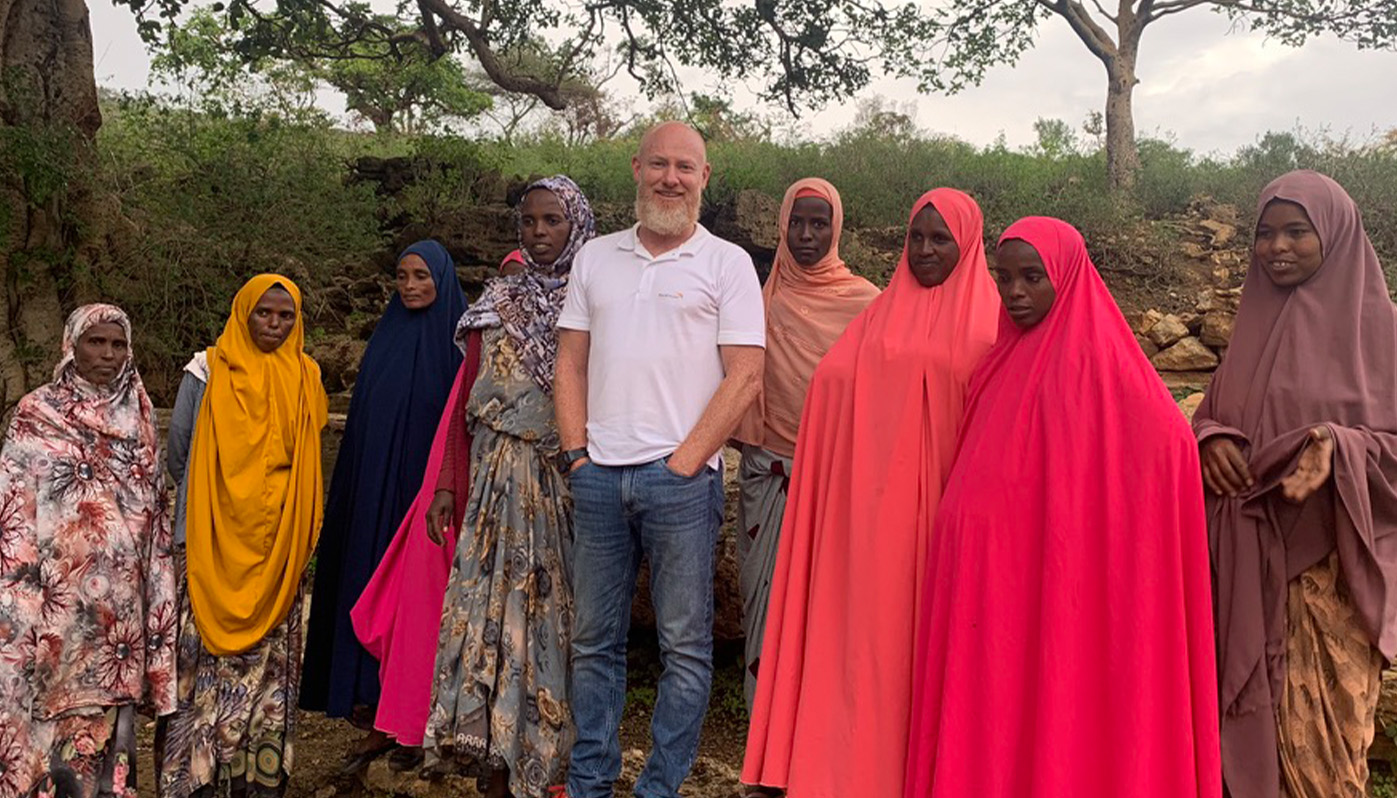
It’s a role he’s moved to having led World Vision's development and humanitarian programmes in Ethiopia, one of the largest humanitarian operations on the continent. The organisation feeds more than one million people a month through food programmes and cash assistance; provides psychosocial support for children to help them process trauma and spend time ‘just being kids’; delivers safe drinking water, sanitation facilities, and shelter materials; provides education services for thousands of children; and delivers livelihood support to give families a hand-up rather than a hand-out.
It’s work he’s deeply proud of and work that has literally saved lives.
"You bring food. You bring water. You bring shelter. You bring psychosocial support," he says.
"You try to bring some fullness back to life. Whatever that looks like in that particular environment, I always strived to support these communities."
The Rotorua resident has come full-circle returning to the city he once-called home as a high schooler, following his early life on the remote Pacific island of Nauru.
In Nauru he was exposed to the power of serving a community, but in Rotorua he was introduced to the value of a tangible skillset.
“Rotorua and the people here are part of what set me on a pathway to become a humanitarian. I saw the way in which those in the forestry sector were able to change the trajectory of vulnerable communities around the world and the way that those with a strong Christian faith were driven to make a difference.”
Stephen’s experience in Rotorua prompted him to study a unique combination of forestry, theology and international development, with the aim of using his skills to help improve the lives of others.
His study led him to missionary work in Papua New Guinea, a challenging environment in which he experienced threats to his life, but also developed a strong understanding of the holistic nature of humanitarian work.
“Living in the jungles of Papua New Guinea I really came to understand that people can’t live a life of hope, fullness or faith until their basic needs are met. They need food, water, shelter, and healthcare before they can open their hearts and minds to anything else. It was a real turning point for me,” he says.
Stephen has carried this commitment throughout his career with World Vision, and it has helped him remain steadfast even during the most difficult of times.
“Soon after we arrived in Ethiopia, there was a period of political upheaval with mass riots and gunfire. Internet and phone coverage were down for a month, and we were basically under house arrest, sneaking out only to source food. It was pretty scary for the family,” he says.
Around this time his young family and some friends took a walk in the hills near Addis Ababa and were assaulted and robbed by a group of men with sticks.
“A couple of our party were really badly beaten and one required surgery. My son was just six and was nearly taken out. It was a very confronting experience for both me and my family, and we carry it to this day. It was a brutal introduction to Ethiopia,” he says.
But again, anger has not given way to despair. He is buoyed by the good that he has been able to achieve despite personal sacrifices.
And he still strongly believes in the value and necessity of humanitarian and development support, despite a worldwide move to reduce foreign aid.
"The world is getting more desperate, not less and that makes humanitarian aid more important than ever before. I have witnessed places where emergency food has been turned off due to aid cuts and I’ve seen the repercussions of that, quite literally deaths due to lack of food and a rise in malnutrition. It’s heartbreaking to see,” he says.
Stephen’s challenge to the New Zealand government and governments around the world is not to withdraw help, but to ask, ‘what’s the best way of helping?’
“I do think it’s important to address how we give aid and to focus on durable solutions that empower people for long-term resilience, so we can actually reduce the reliance on aid agencies. That’s the kind of work we’re really trying to advance at World Vision,” he says.
For Stephen, that means investing in sustainable solutions such as livelihood programmes, climate-smart agriculture, financial literacy, and the slow and patient work of helping communities rebuild in a sustainable way.
It means staying the course in countries when it's hard and rethinking your approach when old systems aren't working.
Above all, for him it means remembering the children in the Ethiopian camps. The ones who walked through unimaginable horror to reach the safety of a makeshift tent in a field.
"Those stories don't leave you," he says. "And they're not supposed to."
After six years in Ethiopia, what stays with Kiwi Stephen Court is hearing the same haunting story over and over again – death, rape, and escape.
“It didn’t matter where I was in the Tigray region of Ethiopia, every child, every woman, every man I spoke with, had the same story. They had walked hundreds of kilometres to reach a makeshift refugee camp. They had lost everything, sometimes even limbs. They had walked over dead bodies to get there. And every girl and woman had a story of rape. Yet still they came,” he says quietly.
The conflict in northern Ethiopia between 2020 And 2022 was one of the deadliest in recent history and was especially systematic in its cruelty. Alongside drones, guns, and landmines, rape was often deployed as a weapon to expel women from their communities and fracture cultural connections.
"It makes you angry. Angry at humanity and what certain people are capable of under certain conditions. Angry for the lost lives of children and innocent people. And angry for justice,” Court says.
“At some point, you do just ask yourself, ‘how can this be happening?’ It breaks you, but I believe people are born good and I strive to bring that goodness and fullness of life to as many people as I can.”
The 52-year-old travelled widely in the early stages of the conflict, visiting camp after camp, in the north of the country to sit with children and hear their raw and brutal stories.
Now, the faces of the children he met, the stories they told him, and the trauma they suppressed have helped to turn his anger into action in his new role as Director of International Partnerships for World Vision New Zealand.
It’s a role he’s moved to having led World Vision's development and humanitarian programmes in Ethiopia, one of the largest humanitarian operations on the continent. The organisation feeds more than one million people a month through food programmes and cash assistance; provides psychosocial support for children to help them process trauma and spend time ‘just being kids’; delivers safe drinking water, sanitation facilities, and shelter materials; provides education services for thousands of children; and delivers livelihood support to give families a hand-up rather than a hand-out.
It’s work he’s deeply proud of and work that has literally saved lives.
"You bring food. You bring water. You bring shelter. You bring psychosocial support," he says.
"You try to bring some fullness back to life. Whatever that looks like in that particular environment, I always strived to support these communities."
The Rotorua resident has come full-circle returning to the city he once-called home as a high schooler, following his early life on the remote Pacific island of Nauru.
In Nauru he was exposed to the power of serving a community, but in Rotorua he was introduced to the value of a tangible skillset.
“Rotorua and the people here are part of what set me on a pathway to become a humanitarian. I saw the way in which those in the forestry sector were able to change the trajectory of vulnerable communities around the world and the way that those with a strong Christian faith were driven to make a difference.”
Stephen’s experience in Rotorua prompted him to study a unique combination of forestry, theology and international development, with the aim of using his skills to help improve the lives of others.
His study led him to missionary work in Papua New Guinea, a challenging environment in which he experienced threats to his life, but also developed a strong understanding of the holistic nature of humanitarian work.
“Living in the jungles of Papua New Guinea I really came to understand that people can’t live a life of hope, fullness or faith until their basic needs are met. They need food, water, shelter, and healthcare before they can open their hearts and minds to anything else. It was a real turning point for me,” he says.
Stephen has carried this commitment throughout his career with World Vision, and it has helped him remain steadfast even during the most difficult of times.
“Soon after we arrived in Ethiopia, there was a period of political upheaval with mass riots and gunfire. Internet and phone coverage were down for a month, and we were basically under house arrest, sneaking out only to source food. It was pretty scary for the family,” he says.
Around this time his young family and some friends took a walk in the hills near Addis Ababa and were assaulted and robbed by a group of men with sticks.
“A couple of our party were really badly beaten and one required surgery. My son was just six and was nearly taken out. It was a very confronting experience for both me and my family, and we carry it to this day. It was a brutal introduction to Ethiopia,” he says.
But again, anger has not given way to despair. He is buoyed by the good that he has been able to achieve despite personal sacrifices.
And he still strongly believes in the value and necessity of humanitarian and development support, despite a worldwide move to reduce foreign aid.
"The world is getting more desperate, not less and that makes humanitarian aid more important than ever before. I have witnessed places where emergency food has been turned off due to aid cuts and I’ve seen the repercussions of that, quite literally deaths due to lack of food and a rise in malnutrition. It’s heartbreaking to see,” he says.
Stephen’s challenge to the New Zealand government and governments around the world is not to withdraw help, but to ask, ‘what’s the best way of helping?’
“I do think it’s important to address how we give aid and to focus on durable solutions that empower people for long-term resilience, so we can actually reduce the reliance on aid agencies. That’s the kind of work we’re really trying to advance at World Vision,” he says.
For Stephen, that means investing in sustainable solutions such as livelihood programmes, climate-smart agriculture, financial literacy, and the slow and patient work of helping communities rebuild in a sustainable way.
It means staying the course in countries when it's hard and rethinking your approach when old systems aren't working.
Above all, for him it means remembering the children in the Ethiopian camps. The ones who walked through unimaginable horror to reach the safety of a makeshift tent in a field.
"Those stories don't leave you," he says. "And they're not supposed to."