
Grandmother with her daughter in law, and her grandson Timothy, age 13
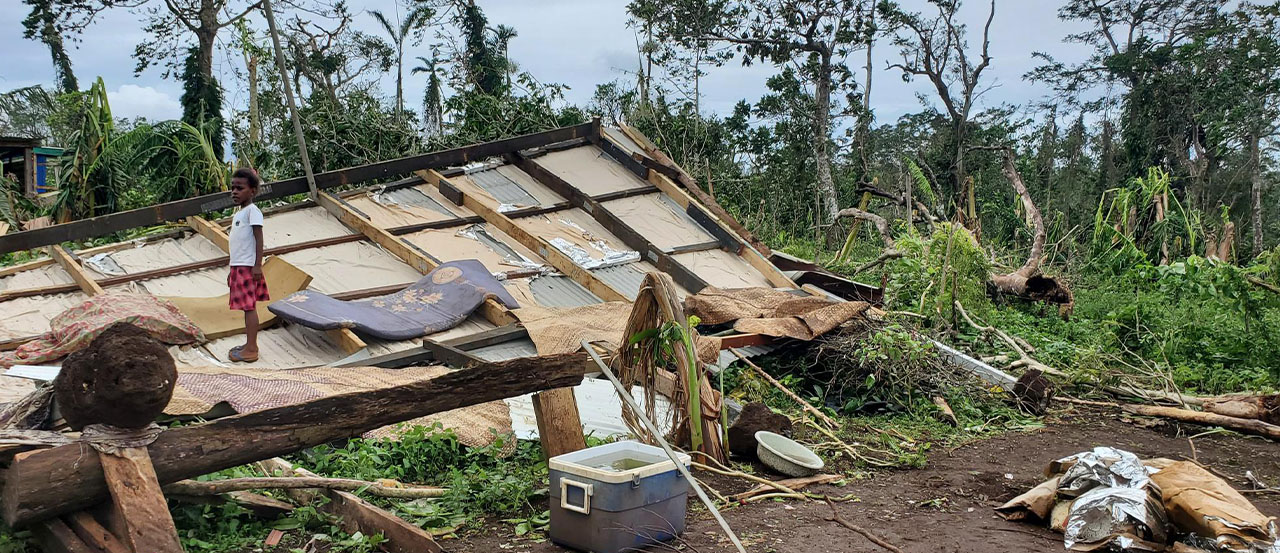
Cyclones, floods and rising seas are already uprooting Pacific families. When disaster strikes, families can lose homes, crops, income and security, while communities face difficult choices about their future.
Most Pacific peoples want to remain on their ancestral lands, connected to the places, languages and communities that hold their identity. The priority must be helping families stay safely where they belong.
But when disasters drive movement, families need safe, predictable and dignified pathways that keep them together and protect wellbeing. This report shows how New Zealand can work with Pacific partners to reduce harm, strengthen protection, and support dignity when movement becomes unavoidable.

>1 per second
45.8 million people were internally displacements worldwide in 2024, more than one person displaced per second.
25% globally
The East Asia and Pacific regions accounted for 14.8 million displacements, or 25% of the global total.
914,000 people
Between 2008 and 2021, more than 914,000 people, or 7% of the Pacific region's population, were displaced within their own countries, with nearly all (87%) due to weather-related events.
Help Pacific communities stay safely where they are
Invest in Pacific-led resilience, adaptation, preparedness and early warning systems so families can remain safely on their ancestral lands for as long as possible.
Close protection gaps when disasters force movement
Create clearer, fairer and more predictable arrangements for Pacific families displaced by disasters, so children and families are not left navigating inconsistent systems when protection is needed.
Put Pacific leadership at the centre
Responses should be shaped with Pacific communities, not for them. New Zealand should establish a Pacific-informed advisory mechanism to guide decisions, strengthen accountability and ensure policies reflect dignity, culture, family unity and lived experience.

New Zealand is a Pacific nation, and our future is tied to the wellbeing and stability of the region.
As climate change intensifies and disaster displacement grows, New Zealand has an opportunity to show long-view leadership by planning ahead with practical, Pacific-informed solutions that reduce harm, strengthen protection, and uphold dignity for children and families.
Read the report